Common Mistakes in Travel Storytelling: 10 Pitfalls to Avoid
October 29, 2026 - Stories


October 29, 2026 - Stories
October 25, 2026 - Stories
October 21, 2026 - Photography
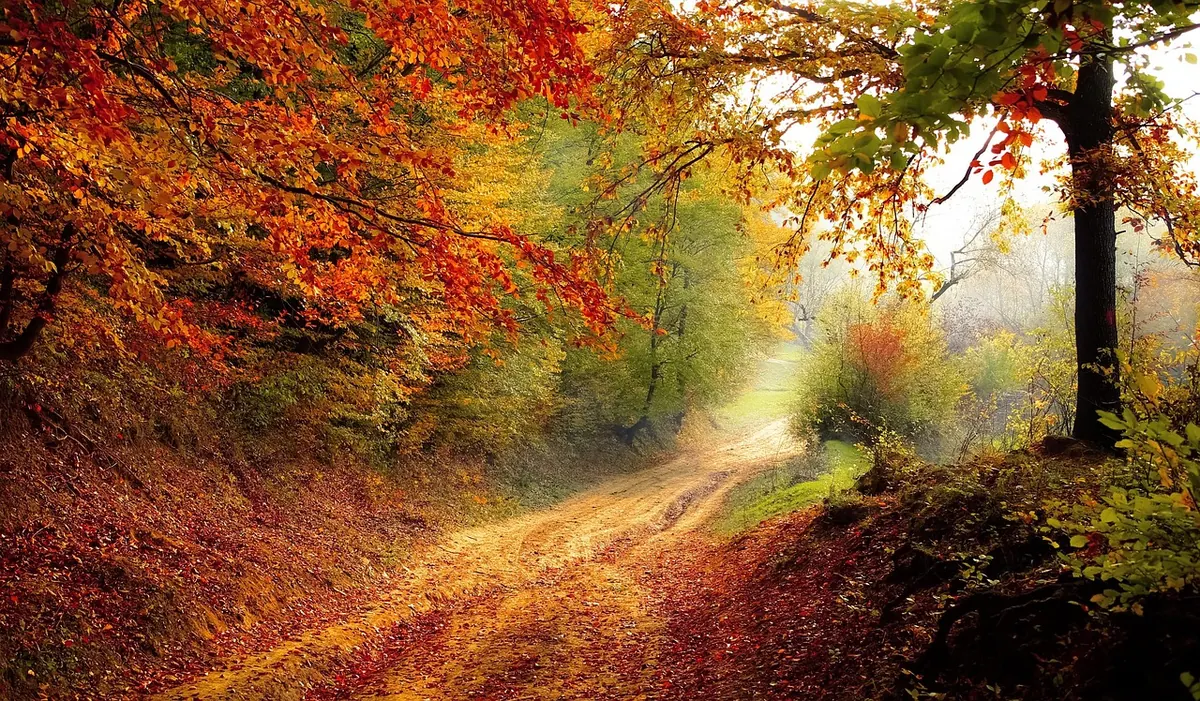
The first week of October in a beech forest above Innsbruck looks nothing like the first week of October in the foothills of the Apennines. One is already thinning, gold at the edges and brown underfoot; the other is still green, waiting. This is the central frustration of autumn photography in Europe, and also the pleasure of it: there is no single season, only a wave that rolls south and downhill over roughly ten weeks. Learn to read that wave and you stop chasing a date on the calendar and start chasing trees.
Three things decide when a European forest turns: how far north it sits, how high it sits, and what grows there. Latitude sets the pace nationally — Scotland and southern Sweden shift weeks ahead of Tuscany and the Peloponnese. Altitude compresses the schedule locally. Walk up a mountain valley in late September and you can pass through three stages of autumn in an afternoon: green oaks at the bottom, yellowing beech mid-slope, bare larch above.
Species decide the palette and the timing. Birch goes early and goes bright. Beech turns copper and holds for a while, then drops fast. Oak is stubborn, often staying bronze into November and clinging to its leaves well past the point where everything else is bare. Larch — the exception among conifers — burns gold late, sometimes not until early November in the Alps, when the rest of the forest is already grey.
Stop thinking about a country and start thinking about a specific hillside. If you have one week free in mid-October, you have options at almost every latitude: go north and low, or stay south and climb. That flexibility is worth more than any forecast.
These are broad windows, not promises. A wet, windy spell can strip a wood in three days; a calm, dry October can stretch the show by a fortnight.
If you can only pick one week and you want the safest bet for the widest range of landscapes, aim for the second or third week of October in a hilly, mixed forest somewhere between the Alps and the Baltic. You will rarely be wrong.
Autumn light is low and soft, which people describe as "golden" and then waste by shooting at noon. In a forest, the sun may not clear the canopy at all, so plan around edges: clearings, ridge lines, riverbanks, the margin where a wood meets a meadow. That is where light does something.
Backlight is the single most useful tool in autumn. Leaves become translucent and glow from within. Find a subject with the sun behind it, shield the lens with your hand, and expose for the bright foliage rather than the average scene.
Metering matters more than usual. Bright yellow leaves against dark trunks create a contrast range your camera will not hold, so expose for the highlights and let the shadows go deep — that is what a forest in October actually looks like. Check the histogram. If the gap of sky between the branches is pure white, pull back a stop.
Cloud has its own value. An overcast day gives you even, saturated colour and no distracting dapple, which is ideal for close work: leaf litter, bark, moss, a single fern. A polarizing filter is worth carrying, both to cut haze in distant layers and to control glare on wet leaves — but rotate it slowly, because it can also flatten the sheen that makes foliage look alive.
Woodland is visually chaotic. Your job is to find one thing and make the rest support it.
Depth of field is a choice, not a default. F/11 for the interior of a wood, where you want the first ten metres sharp. F/4 or wider for an isolated spray of leaves, letting the confusion behind it dissolve. Neither is better; they answer different questions.
Rain saturates colour and darkens bark, which is exactly the contrast those yellow leaves need. Mist forms after a clear, cold night with damp ground — be in position before sunrise and expect it to lift within an hour of the sun hitting the valley.
Wind is the enemy. It strips trees and blurs exposures, so on a gusty day raise the shutter speed, push the ISO, and shoot handheld in bursts. And go out the morning after a storm: the fresh leaf fall is untouched, the light is often clear, and everyone else has stayed home.
Plan backwards from the trees. Pick a species and an altitude first, then a region, then a week. Give yourself three mornings rather than one — autumn weather is unreliable and a single washed-out day should not define the trip. Carry a tripod, a microfibre cloth, spare batteries kept warm in an inside pocket, and footwear you trust on wet leaves. Check access rules before you park at the edge of a wood; many European forests are private, and hunting seasons close some paths in autumn.
Then walk slowly. The best frame in an autumn forest is usually about fifteen metres from the car park, seen properly for the first time.
Photo: Valiphotos / Pixabay
Ten habits that flatten travel writing, from postcard adjectives to missing stakes, each with a specific practical...
A working guide to coastal villages at first light: how fishermen, café counters, and shifting shadows shape a...
October 29, 2026 - Stories
October 25, 2026 - Stories
Copyright © 2026 Tracce Del Vento. All Right Reserved.