Common Mistakes in Travel Storytelling: 10 Pitfalls to Avoid
October 29, 2026 - Stories


October 29, 2026 - Stories
October 25, 2026 - Stories
October 21, 2026 - Photography
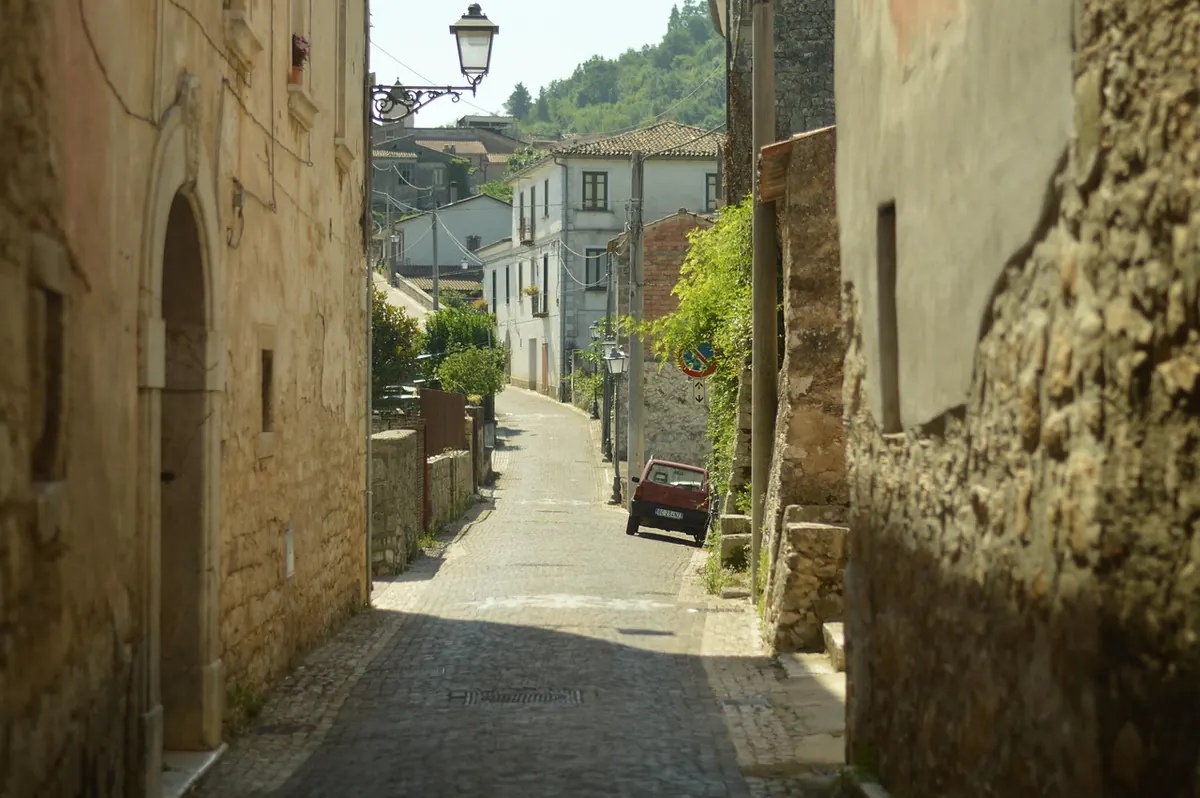
The bar opens before the bakery, and the bakery opens before the newsstand. By half past eight the same four men are at the same table, and the woman who runs the alimentari has already swept the strip of pavement in front of her door. None of this is staged for visitors. That is exactly why it is worth your time: in a town of four thousand people, the daily routine is the attraction, and you only see it if you stand still long enough to watch it happen twice.
Most Italian itineraries are built as a sequence of highlights, connected by trains and held together by a list. That works in Rome. In a small town it fights the place. What follows is a beginner's approach to pacing a trip around the things that repeat — the morning coffee, the evening walk, the market on its one fixed morning — rather than around the things you can photograph once and leave.
Slow travel is not a philosophy you adopt or a linen wardrobe you buy. It is a set of scheduling decisions, and most of them are about subtraction. Fewer towns instead of more. One base instead of five. A morning with nothing booked between eleven and one. A willingness to eat the same lunch twice because the second time the owner remembers how you take your coffee.
The payoff is not mystical. You get better food, because you stop choosing restaurants in a hurry. You get better conversations, because people have seen you before. You get to notice the small machinery of a place: which street the schoolchildren flood at one o'clock, where the old men move their chairs as the shade shifts, which shop closes without explanation on Thursdays.
Three nights is the minimum for the shift to happen. The first evening you are a stranger with a suitcase. The second morning you have a routine. By the third you have a table.
Choose a town of roughly two to fifteen thousand people with four things: a bar that opens early, a grocery you can walk to, a weekly market, and a loop of road or path that leads out of the centre and back in under an hour. Hill towns in Le Marche, Umbria, Abruzzo and inland Basilicata are generous with all four. So are the smaller Langhe villages in Piedmont and the interior of Calabria. Coastal towns work too, but out of season, when the waterfront belongs to residents again.
Stay inside the centre if you can. A room above the piazza and an agriturismo three kilometres down the valley are different holidays: one puts you in the middle of the evening walk, the other puts you in a car. Parking outside the walls and walking in with a small bag is a reasonable compromise, and small towns rarely have the traffic problems that make city parking miserable.
Your first useful act in any new town is to find out where people have breakfast. Not the café with the English menu on the main square, but the one where the counter has a stack of newspapers and a bowl of sugar sachets that nobody uses. Go at seven forty-five or eight. Order a coffee and a pastry, stand at the bar if there is room, and stay for fifteen minutes. You will learn the town's schedule faster than any website will tell you.
From there, the shape of the day is easy to read. Errands happen early. The market is busiest before ten. Lunch is real and unhurried, and by half past one the streets empty out. Between roughly two and four, shutters come down, dogs sleep in doorways, and the only sound is a scooter and a television through an open window. Plan your own quiet hour there instead of treating it as an inconvenience.
Half an hour to forty-five minutes, out of the centre and back. In a walled town, follow the perimeter and look down at the gardens and the drop beyond it. In a hill town, take the steepest lane upwards until the houses thin out into olives and scrub. Do it before the heat and before you have decided anything about the day. You will come back with a mental map and, usually, an idea for the afternoon.
The passeggiata is not a performance for tourists; it is the town's daily roll call, and you are welcome to join it. Between six and seven-thirty, depending on the season, the main street fills with people walking nowhere in particular: grandparents, teenagers in groups of six, young parents pushing prams. Walk a lap or two. Sit on a bench. Say buonasera when it is said to you. This is the hour when a town is most itself, and it costs nothing.
Almost every small Italian town has a market on one fixed morning of the week, and it changes the character of that day entirely. Ask at your hotel, at the bar, or at the town's tourist office which morning it falls on, and arrange your plans around it.
Order one coffee at an outside table and stay for forty minutes. This is harder than it sounds for anyone used to measuring a day by what they have seen. Bring a notebook, or nothing at all. In small towns the bar functions as newsroom, post office and social service; half the useful information you will gather in a week arrives while you are doing nothing in particular.
You will also run into closed doors. Churches keep limited hours and sometimes lock at midday. Small museums open only at weekends in low season. Shops shut for lunch and, in some places, for a half-day midweek. None of this is aimed at you, and none of it is worth getting annoyed about. Check opening hours the day before, ask a person rather than an app, and keep a second option in reserve.
Book your accommodation for the whole stay in one town; moving every night is the opposite of what you are trying to do. Keep the days themselves loose, with a single anchor each — a market, a walk, a lunch — and let the rest fill in. Learn ten phrases, including how to ask whether a place is open and what time it closes.
Carry some cash for small purchases, since not every bar or vegetable stall is set up for cards. Download offline maps before you arrive; lanes in hill towns dead-end in ways that mapping apps handle badly, and street signs are decorative at best. If you plan to day-trip by bus or the region's slow railway, confirm the last return service in person, because rural timetables thin out sharply in the afternoon and on Sundays.
Finally, pack for cobbles: flat shoes with grip, a light layer for stone churches, and a small bag you can carry all day. Then leave the list at home. The town will hand you a better one by the second morning.
Photo: cassiafriello / Pixabay
Ten habits that flatten travel writing, from postcard adjectives to missing stakes, each with a specific practical...
A working guide to coastal villages at first light: how fishermen, café counters, and shifting shadows shape a...
October 29, 2026 - Stories
October 25, 2026 - Stories
Copyright © 2026 Tracce Del Vento. All Right Reserved.